
on signing an agent

The publishing odds are stacked against an aspiring debut author. In the cutthroat industry that converts stories to books, even having an established name (not to mention talent) doesn’t guarantee your work is going to make it to e-readers and bedside table stacks across America and beyond. But I couldn’t let myself dwell on the negative while writing my first novel. In the world of fiction writing (which differs from non-fiction) you write the book first, pitch second. So as I poured my heart and soul into completing my work, the farthest thing from my mind was failure.

My mentor later warned me: “You’ll probably get over 100 rejections. But don’t let it get you down. The right literary agent will love your story enough to take a chance on you.” Her words didn’t lessen the impact of the first rejection or even the tenth. I’ll spare you the final number of agents who sent their regrets. I’m sorry, I’m not the agent for this work. Most wish you luck. Some don’t respond at all. One stapled a mimeographed slip of paper to my original query letter. Suffice it to say, I began writing a second novel as a form of therapy.

Then I got a nibble. A request for the first three chapters. A few days later, the same agent asked for the full manuscript. It had been months since anyone had asked for the full. A flicker of hope fluttered in my stomach for three weeks. She ultimately rejected the story, though it wasn’t despair she left me with, but hope. She complimented my storytelling ability and even my novel. She had read in my blog (yes, agents read the blogs of prospective authors) that I was writing a second novel and offered to read it when I was done if I didn’t yet have representation. I nicknamed her Nice Agent, short for the nice agent who thoughtfully rejected me. Then in late January, I took her up on her kind offer.

Fast forwarding through the details, I’m thrilled to announce that the last agent to reject my first book, the first agent I pitched on book two, offered me representation on that second book. Barbara Collins Rosenberg of The Rosenberg Group is officially my literary agent. (Cue applause and champagne.)

There’s nothing more validating than a professional who believes in your work. I recognize we have an uphill battle ahead of us; having an agent doesn’t guarantee publication, but I trust in Barbara, her instincts and connections. I know she’ll be thoughtful about which publishers she takes my story to, and she already has a great hook in mind. I’m fueled by her enthusiasm for my career as a novelist. Here’s how she laid it out: the second book gets published first, the sequel gets published second, and the first book I wrote (with a tiny facelift) gets published third, while I work on my seminal fourth novel.

I’m a jumble of feelings right now: overwhelmed, giddy, relieved, scared. But mostly, I feel gratitude for Barbara. My agent. I don’t think I’ll ever get tired of saying those two words.
the fine print

I have to admit I’m one of those people who never looks at her phone bill. I’ve long had my wireless packaged together with my wifi, landline and cable (the triple play in Verizon parlance) and that universal bill is auto-deducted from my bank account each month. I went paperless way back when but rarely check my itemized bill online because I can never remember my login information.

Then I read this article: 12 Things You Need to Stop Paying For. The top item on the list, books, is a non-starter. I line my walls, my floors, my office with them. I don’t consider money spent on books to be a waste. In fact, I hope someday other like-minded people buy my books in high volume. I don’t own any original art not created by my children, but I do have lots of books. They are works of art, and in some cases, serve as a makeshift side table.

However, the second item on the list caught my attention: Cable TV.

We have hundreds of channels even though the kids only flip between three stations, and I have even fewer I routinely watch. While I can fall into the couch cushions like any other slug, it’s more important to me to read. I have a couple friends who use Apple TV, and that seems like a more streamlined approach to rotting the brain. So I ordered an Apple TV device and promptly called Verizon this morning to discuss my account.

I was fully prepared for the hard sell. “Stay with us and we will x, y, z your plan.” But I was pleasantly surprised. Not only did the customer service rep help me downgrade to a double play (wifi and phone) package, she found me other savings. I was paying for unlimited games on the computer? My computer is off limits to games. A phone protection plan? That dates back to the 90s. It isn’t even offered anymore, but I was grandfathered in to pay it. Virus protection? Isn’t that why I have a Mac? All in all, the Verizon rep with a midwest accent helped me trim nearly one hundred dollars off my monthly bill. Then I went over to Verizon Wireless where they saved me an additional forty-five bucks by switching me to a smaller data plan (I wasn’t coming close to using the plan I had) and eliminating some nebulous line access charge I was being pinged $15/month for.

I can’t believe I waited this long to make these budget friendly moves, but I tend to default to sticking with what I know.  My communications bill should not cost more than my health insurance, and with these changes, it no longer will. The lesson: read the fine print. Know what you’re paying for. Change is scary, but it’s empowering to make informed choices.

romancing the snow

St. Patrick's Day Storm of 2014
St. Patrick’s Day Storm of 2014

I’ve had a thing for snow since I was a little kid. I was excited as an eleven-year old to move from California to Maine where I’d get to experience white Christmases, hot chocolate by the fire and days off from school. Except living in Maine, we rarely had “snow days.” Instead I made the trek through the field in front of my house to my friend Debbie’s house and then together we walked the remaining hundred feet or so to our high school. We rarely got rides (poor us) and at some point, I realized no one else was wearing snow pants BECAUSE THEY ARE NOT COOL when you’re a teenager so we often arrived with wet jeans and feet, but youth is immune to a certain level of discomfort.

Fast forward to adulthood, living in the MidAtlantic is frustrating for a snow lover. We’re caught in snowstorm purgatory; dramatic weather forecasts and wild variability often turn a six-to-nine inch snow prediction into an inch of slushiness. We’ve come to expect the letdown (and the accompanying mind boggling school delays) but it doesn’t make busted snow totals easier to accept.

The most recent storm to ravage the northeast is a prime example of how my heart got set up for disappointment. While my sister in New Hampshire was frolicking in two feet of snow, we got a dusting, nowhere near the two-to-four inches we expected.

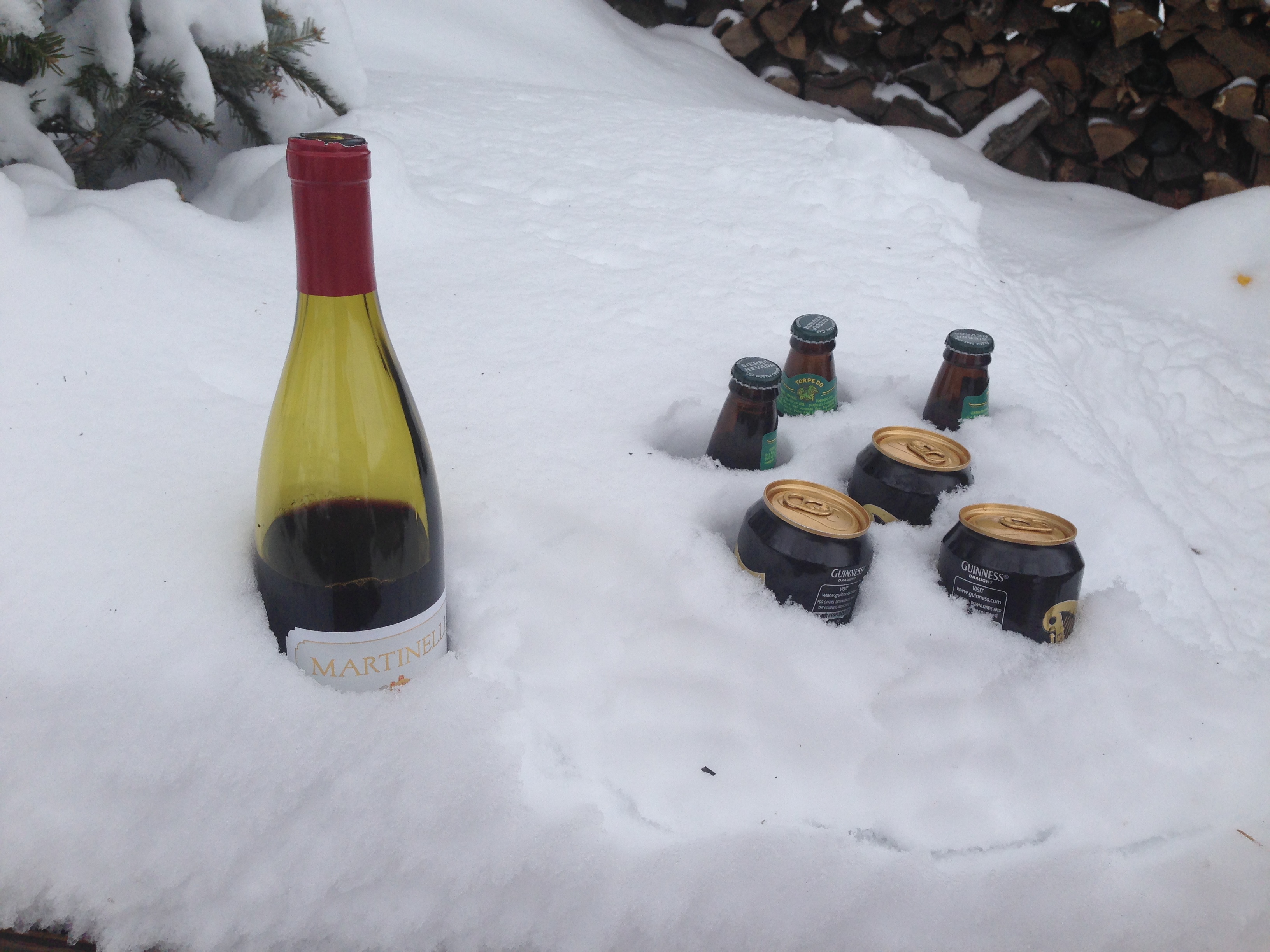
I fully admit I’ve romanticized the idea of snow the same way I have vote-a-rama nights in the Senate when staff stay until the wee hours and members take stacked votes one after the other. That is to say, I don’t really want to go back to the Hill, I just miss the camaraderie. I don’t want to lose power, be evacuated from my home because of storm surge, or get stranded without eggs, bread and milk. I do want to have enough snow to legitimately shut down the city, but not lose electricity in the process, and have my friends with four wheel drive over for a roaring fire and delicious wine. I long for the bonding of snowmaggedon without the inconveniences my New England loved ones faced this week. I want the St. Patrick’s Day snow storm of last year, when we huddled over the fire pit, Guinness kept cold in a snow bank.

While the upper Atlantic regions dig out, I have my eyes glued to the snowflakes sprinkled over the Weather Channel’s Sunday forecast. If only this time, we are the ones who get ravaged.

the 30-day minimalism challenge

“Less is more” is all the rage as evidenced by recent obsessions with normcore fashion and getting back to basics. I applaud efforts to shop locally, get kids outdoors and conserve time, energy and resources. But there’s a difference between making a lifestyle change and adopting a trend for the fifteen minutes it’s hot.

By way of example, I recently came across the 30-day minimalism challenge. “Looks interesting,” I said to myself. “I think I’ll try it.”

I didn’t tackle the tasks in order, because “define your goals for this year” was number 12 on the list, but it made sense to put it first. The next day, I meditated for fifteen minutes (longer than my usual five to ten). And the day after that, I decluttered my digital life. But then one day I was supposed to “unfollow and unfriend” which I already did under digital decluttering.  Number 28 said to let go of a goal, but I had just defined them.

Go one day without makeup. Read a book instead of watching TV. Clean out your junk drawer, closet, beauty supplies. Learn to enjoy solitude. I relish downsizing, reading and solitude. I found myself less and less inspired by the tasks. After six days, I slacked off, not because the challenge was hard, but for the opposite reason. Frankly, changing my behavior for one day didn’t feel particularly meaningful.

In my opinion, it’s more impactful to pick one item and own it for a sustained period of time. Last year I vowed to not drink bottled water unless it was my only thirst quenching option. I not only succeeded in curbing an expensive habit, but I saved an itty bitty corner of the ocean at the same time.

I don’t mean to dis the 30-day minimalism challenge. Addressing one’s inherently bad practices for one day is better than not at all. Some might even use it as a launchpad for long-term change. But this particular challenge feels like fast food minimalism; it’s one thing to embrace tenets of less is more because it’s en vogue and another all together to do so purposefully and with clear intention.

star light, star bright

My default entertainment in the car is to listen to NPR, a habit I only dial away from if I’m tired and need a livelier beat, have heard the segment already, or during Christmas season when I can’t get enough of my favorite yule time carols. It isn’t my sole news source, but it’s safer than checking my twitter feed while driving, except, of course, when the tear-inducing StoryCorps airs. Now that can be hazardous.

Last week, I was en route to yoga when a piece came on about the Kerry Dark Sky Reserve in Ireland. I turned up the volume. What is a dark sky reserve? I learned it’s a place, public or private land of 173,000 acres or larger, possessing “an exceptional or distinguished quality of starry nights and a nocturnal environment.” There are three such designated places in the world, and the Kerry Dark Sky Reserve is the only one in the Northern Hemisphere.

I wanted to close my eyes and picture a place where stars are vivid, but that would have born a set of complications I decided best not to risk behind the wheel. As I listened to Ari Shapiro interview the local Irish woman who spearheaded the recent dark sky designation in Kerry, I felt the enthusiasm in her voice the same as I feel the passion of a radio broadcaster calling a baseball game. Sight unseen, I put a visit to the Kerry Dark Sky Reserve at the top of my dream travel list. I want to see the Milky Way, more shooting stars than I can count, a full moon unfettered by urban light pollution.

Once my car was safely in park, I googled images of the reserve. It’s even better than I imagined. While I know pictures don’t do it justice, I ogle them daily. I can’t explain why this reserve, why these stars, call to me. Nor do I know when the opportunity will arise to visit them, but I have to before their brilliance is diminished. After all, we’re melting the glaciers, clogging the oceans with plastic bottles, and confusing our own pineal glands with too much light, so it isn’t a stretch to presume some day we’ll ruin the last vestiges of dark sky too. I’m determined to get there before that happens.

a year in good reads

You can’t be a good writer without being a voracious reader, and I take the book stack on my bedside table seriously. I find there’s practically no better way to overcome writer’s block than to pick up a book and lose yourself in its pages. Love the book or hate it, there is inspiration to be found in other people’s words. In fact, I so disliked one recently read book (which I will not mention because I do not want to author-bash) that I just had to get back to the computer and write because if that book got published, surely mine stands a chance.

Anyway, 2014 was undeniably a good year for reading enthusiasts. My absolute favorite book of the year was ALL THE LIGHT WE CANNOT SEE by Anthony Doerr. This book is an achingly beautiful interwoven tale of a blind French girl and young Nazi boy during World War II. I can’t even begin to do it justice with a plot description so just take my word for it and put it on your Christmas list now. And I mean, now now.

A close second was STATION ELEVEN by Emily St. John Mandel. I picked a good time (shortly after the Ebola panic subsided) to read this novel about the end of most of humanity due to a highly contagious flu. Contrary to what you might think, there is nothing about this book that is hysteria-inducing. In fact, the death of ninety-nine percent of humans is very matter of fact; it’s how the remaining one percent connect to each other as they move on with life, love, religion and the arts that sucks you in and leaves you turning page after page, well past a reasonable bedtime hour.

EUPHORIA by Lily King and A LIFE IN MEN by Gina Frangello (both profiled in my summer reading list) rank in my top five, and rounding out the top is REMEMBER ME LIKE THIS by debut novelist Bret Anthony Johnson. This heart wrenching account of the upheaval a family endures after their kidnapped son is found and returned to them left me sleepless and teary. Okay, maybe that doesn’t make you want to run out and grab a copy, but you should.

As the last days of December tick down, I’m sad there are still so many books on my TBR list that I won’t get to before 2015 and its slate of offerings. EVERYTHING I NEVER TOLD YOU by Celeste Ng, THE CHILDREN ACT by Ian McEwan, and THE PAYING GUESTS by Sarah Waters would all be great finds under my Christmas tree and would quickly jump to the top of the pile of books currently awaiting my eyes.


whoops, I wrote a second novel

So this funny thing happened as I was pitching my first novel to literary agents… One day over the summer, exhausted yet unfulfilled after sending out a round of queries, all of which take time to research and must be personalized to suit the requirements of the agent being pursued, I thought to myself, “I need to write something more creative than a letter.”

Two days later, the idea for a second novel was born.

Over the course of a couple of weeks, I fired off a quick 25,000 words. But then I stalled. I was away for much of August, and while I wrote a little while I was gone, I was not as prolific as I hoped to be.

In September, I began working with the Virtual Writer Workshop, a small online community of writers who embraced me into their fold. Every two weeks, my group shared up to 7,000 words which the other members of the group critiqued. I don’t know about you, but I find my writing improves when I’m critiquing others. It’s easier to see your own weaknesses through the lens of another writer’s good prose. Under the pressure of deadlines and encouragement from my group members, I wrote above and beyond the workshop goals. Through this process, I figured out how I wanted to end the novel, and then I wrote the heart of the story with that ending in mind.

Two weeks ago, I sent the completed first draft of novel #2 out to a small group of beta readers, kind volunteers who will provide feedback on everything from misplaced commas to structural flaws with the plot. One of those beta readers is a writer I met through the workshop. She got “hooked” (her words) on my story, and I can’t wait to hear what she thinks after reading it beginning to end.

In the meantime, waiting for feedback is hard (I’m impatient) so I’ve taken a break from the story to work on other projects. I plan to pick it back up with fresh eyes and new perspective once the critiques are in. My ultimate goal is to have an agent-ready manuscript by the end of January. Ambitious, but doable.

“Has she given up on novel #1?” I can feeling you asking. Never. But I’ve heard from more than one author that often the first book you write isn’t the first published. In my humble opinion, the super secret plot structure of novel #2 is more unique than the love triangle at the core of novel #1. So I’ll shift my focus to the second book, and if an agent nibbles, guess what? I have a second manuscript (novel #1) waiting in the wings. The second book also lends itself to a sequel. Hey, writing novel #3  may well be to pitching novel #2 what writing novel #2 was to pitching novel #1.

What am I waiting for? Maybe I’ll just start writing now.


my cup runneth over

Yesterday, at the prompting of the youngest of my hosts, we went around the table and each shared three things we are thankful for. I gave thanks for friends who feel like family; kids who are funny, smart and thoughtful; and the opportunity to spend the last year exploring my creative interests.

What I didn’t mention for the sake of time and a desire to eat the feast before us: the ability to put words to paper to craft a story, as well as all the tools (computers, writing implements, time) that go along with that effort. Friends and a professional network who are willing to read and critique that writing.

The opportunity to take yoga teacher training under the guidance and wisdom of some wonderful yogis and with my inspiring classmates, all of whom share so much of themselves and help me improve my practice.

Hearth. Home. Health. Family. Health Insurance. Cats. A wine collection that would sustain me and a small army through snowmaggendon 2.0. A safe school for my kids. A paid-off car that gets me where I need to be and economizes fuel while doing it. Accidents that turn into serendipity. Books.

I’m trying to get better at being grateful everyday, not just when the calendar reminds me to. The pause we all took on Thanksgiving was too quickly replaced by the frenzy of Black Friday. As we approach the Christmas season, the challenge will be to not lose sight of what really matters. For me, that means not setting my alarm to score the best deal at my favorite shopping destination (you know who you are and I love you) but keeping with me today the spirit I embraced yesterday.

the day my computer screen went black

It had happened before. My MacBook Air screen goes black and it takes many rounds of on and off button pushing to get it to wake up.

But it had never happened in conjunction with spilled water.

I didn’t panic at first. There wasn’t that much water. The blank screen was more annoying than anything. I had been struck by the inspiration bug, finally ready to revise the opening chapter of my work in progress after undergoing a workshop critique. I was itching to get my thoughts on paper, and my computer’s lack of cooperation was stymying that effort.

“Fine. I’ll show you. I’ll take you to Apple,” I said to my computer, convinced by the time I drove to Georgetown, found parking, and got to the Genius Bar, the screen would defiantly light back up at me with nothing worse than a crash version of my word doc. Doesn’t all technology behave in front of the experts? “Really, it wouldn’t turn on,” I heard myself explaining to the tech.

But that was not the situation at all. The computer wouldn’t cooperate with my 23-year old wiz kid helper either. He took it in the back so they could check out the guts. His report was grim.

“We found severe water damage.” I groaned and put my head into hands. He quoted the price to fix it, a figure high enough that I considered buying a new computer instead. Then Wiz Kid told me the real bad news. “Unless you pay for data retrieval, the chances are we won’t be able to save anything.”

Those words echoed through my head as tears sprang forth and the contents of my stomach threatened to make an appearance all over the shiny clean lines of the Apple store. It would cost at least $1000 on top of the repairs to potentially retrieve my word files.

I continued to cry. Okay, sob. I shook. I could feel the customers around me both trying to ignore me and to figure out what happened. I had recently started saving documents to Google Drive but I couldn’t remember what I had saved there. My novel? My agent queries? My entire work in progress or just the few chapters I had sent out for critique?

In a moment of clarity, I asked Wiz Kid to let me sign in to Google on one of their computers to check what documents I had access to. I could barely see through my tears though and was unable to focus on the file names.

“I don’t see what I need. I don’t see what I need,” I chanted, desperation spilling off me.

“I get it,” Wiz Kid sympathized. “If I, like, lost a paper for school or something I’d be really upset too.”

“I’m an aspiring novelist,” I snapped back. “I wrote an entire book and am three-quarters of the way through writing the second one.” He didn’t respond. Then my eyes honed in on the two file names I needed. Both books were safe in the Google Drive.
Everything else? Expendable.

But I cried all day nonetheless. I tried to find peace. Hey, I had the two most important documents. I didn’t lose my only hard copy of my novel to fire, wind or theft. But I couldn’t ground myself, and the more I thought about my first world loss, the more despondent I grew.

Today is better. A few people have commented “not having your computer is like not having a limb” but I refuse to buy into that sentiment. I have hands and pens and paper. I still have my imagination and the means to express it. Maybe these five to seven business days while Apple repairs my computer will be good for creativity. Maybe it will be good for me to not be constantly tethered to and reliant on a piece of technology.

So on this cold rainy day, I’m curled up on the couch instead of sitting at my desk. I have a blanket, cup of tea and two cats. I have four printed out chapters of my work in progress. And today, I will write like so many did before a power source and the right software were required to get the job done.

on being polite

Spurred by my experience at the soccer game the other day, I got to thinking about what it means to be polite.

When the now infamous swinger soccer dad took our conversation down a particular path, I should have stopped him short: “Excuse me, sir, but I’m trying to focus on my son’s game.” I could have achieved the same result by relocating my seat. I could have told him to shut the fuck up. But I didn’t do any of those things, because I didn’t want to cause a scene.

Nor did I follow my instincts last month when a particular situation made me uncomfortable; I didn’t want to offend my friend and/or her significant other by changing course. And I’ve regretted that decision.

What does all this say about my disposition? I’m not a pushover, but I don’t like to create waves. In fact, I loathe confrontation. I like to keep the peace. And I’ve been doing just that my entire life, starting with my divorced parents, continuing with feuding roommates, and still now when the moment calls for diplomacy.

But there’s a balance to be struck. We teach our kids manners. We tell them to let us know when they seen an injustice being committed. But what if calling out that injustice requires us to temporarily shelve those manners? Frankly, being polite isn’t always the best, or safest, approach. It’s not impolite to protect yourself, be it from jerks sitting in the bleachers or worse.

Does anyone think Creepy Dad is sitting at home thinking, “gosh, I was really impolite to that soccer mom the other day.” Hell, no. He’s probably charting a new course of action to try out at the next game. And I will be prepared with a strongly worded response. If he thinks I’m being rude, then so be it.